Por qué tu cerebro se desconecta durante el despegue
Escrito por Alex Gervash, piloto comercial (31 años) y especialista en fobia a volar (18 años, más de 16 000 casos tratados)
Según la teoría polivagal, cuando percibimos un peligro en una situación de huida, nuestro cerebro racional se desconecta literalmente. Comprender en qué estado del sistema nervioso te encuentras es el primer paso para volver a la seguridad.
¿Alguna vez has sentido que te vuelves completamente loco durante el despegue? ¿Como si no pudieras pensar con claridad, no pudieras recordar las normas de seguridad que conoces y no pudieras tranquilizarte?
Hay una razón científica: tu cerebro racional se ha desconectado.
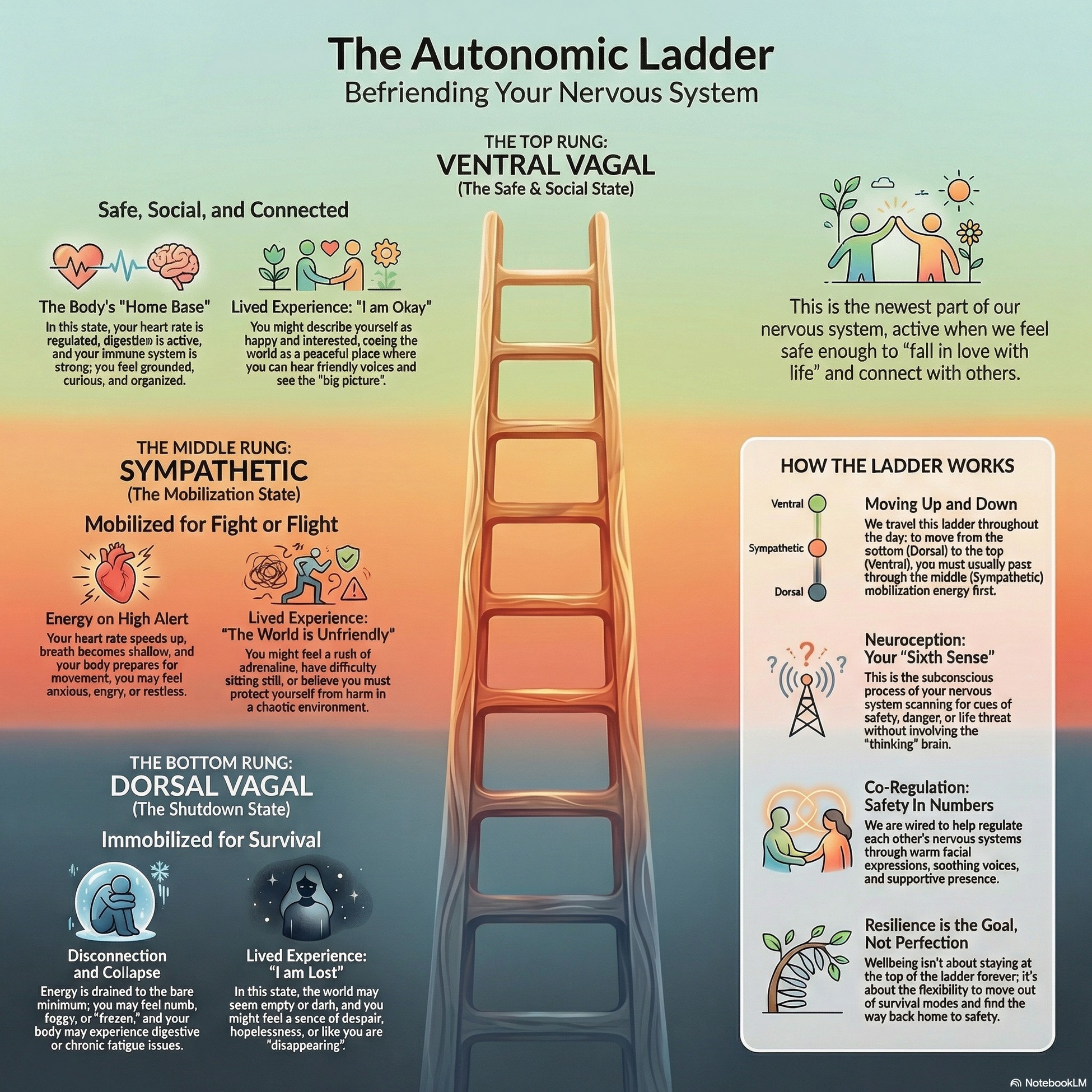
Según la teoría polivagal del Dr. Stephen Porges, cuando percibimos un peligro, nuestro sistema nervioso tiene tres posibles respuestas:
VAGAL VENTRAL (Seguridad y sociabilidad): Te sientes tranquilo, conectado y capaz de pensar con claridad. Este es el estado en el que quieres estar.
SISTEMA SIMPÁTICO (lucha o huida): El corazón te late con fuerza, los músculos se tensan y te sientes con energía. Estás ansioso, pero sigues siendo capaz de actuar con cierta normalidad.
VAGAL DORSAL (Parálisis/Apagado): Te sientes entumecido, desconectado, atrapado. Es hora de desconectar y ahorrar energía.
Durante un ataque de pánico en un avión, ya no eres tú quien piensa. Te domina tu cerebro reptiliano, esa parte primitiva que solo piensa: «Voy a morir ahora mismo».
En este estado:
❌ La lógica no funciona
❌ Los pensamientos racionales no tienen ningún sentido
❌ No recuerdas nada que te sirva de ayuda
❌ Es que... no estás ahí
¿La buena noticia? Saber en qué situación te encuentras es el primer paso para volver a ponerte a salvo.
En resumen
Según la teoría polivagal, cuando percibimos un peligro en una situación de huida, nuestro cerebro racional se desconecta literalmente. Comprender en qué estado del sistema nervioso te encuentras es el primer paso para volver a la seguridad.
Profesionales de la psicología y la terapia del trauma
Profesionales de la aviación comercial
Especialistas en el tratamiento del miedo a volar
Alex combina 31 años de amplia experiencia en seguridad aérea con casi dos décadas de experiencia clínica, habiendo ayudado con éxito a más de 16 000 personas a superar las complejidades de la aviofobia. Como especialista dedicado al miedo a volar, Alex utiliza estrategias basadas en la evidencia, como la terapia EMDR, la Experiencia Somática y la TCC, para ayudar a cada pasajero nervioso a reestructurar su respuesta fisiológica ante el peligro percibido. Esta trayectoria única permite ofrecer apoyo personalizado durante el vuelo y herramientas prácticas que transforman la fobia a los aviones en una comodidad duradera al volar. Ya sea actuando como acompañante de vuelo profesional u ofreciendo asesoramiento a distancia, Alex sigue siendo una autoridad destacada a la hora de recuperar el placer de viajar.
Especialista en: miedo a volar, tratamiento de la aerofobia, especialista en ansiedad ante los vuelos, terapia para el miedo a las turbulencias, ataques de pánico en aviones, aviofobia, fobia a volar, apoyo a pasajeros nerviosos, ansiedad ante el despegue, miedo al aterrizaje, tratamiento de la fobia a los aviones. Tratamiento basado en la evidencia mediante la experiencia somática, la terapia EMDR, la regulación polivagal, la regulación del sistema nervioso autónomo y la atención informada sobre el trauma.