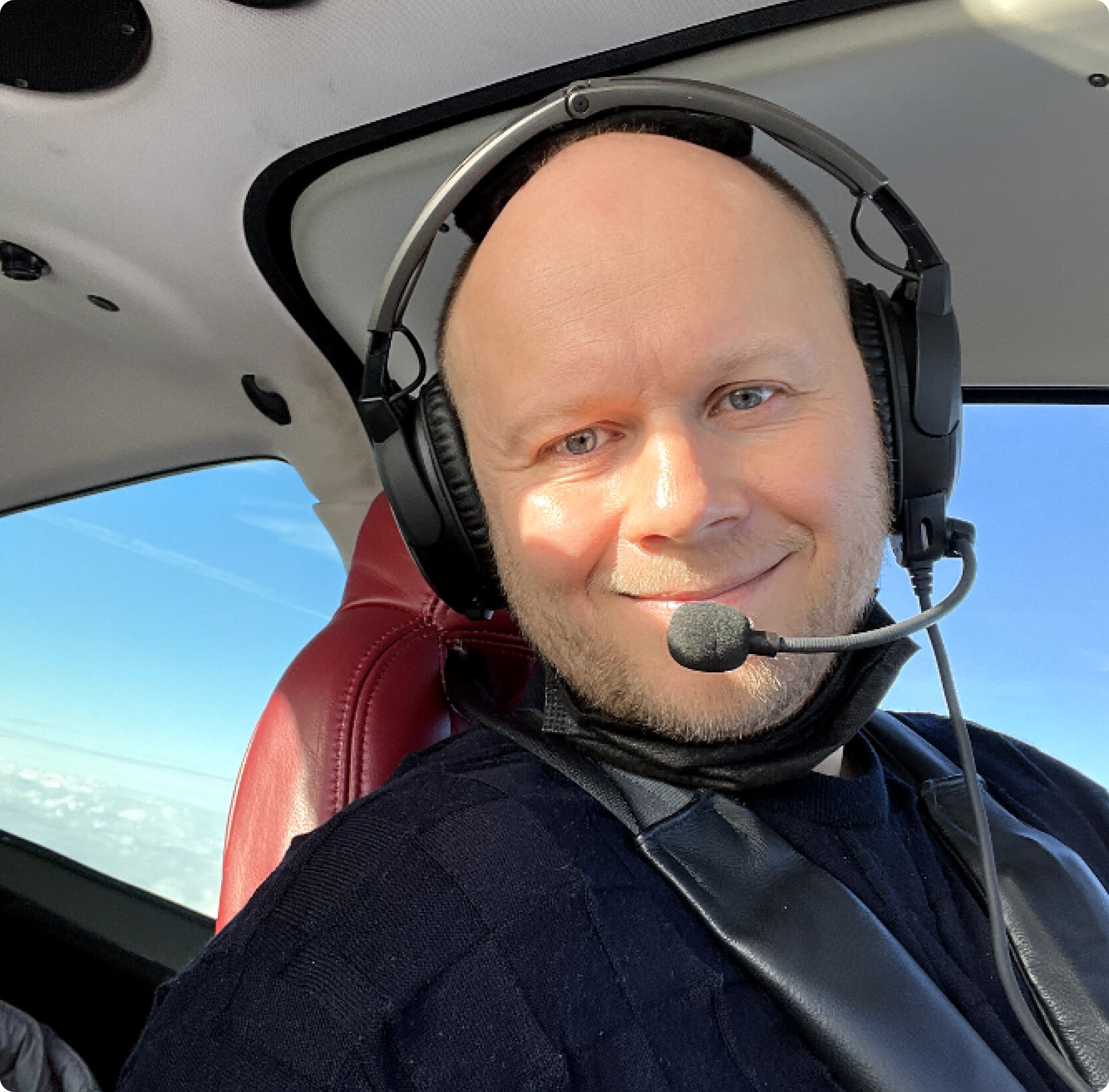
Escrito por Alex Gervash, piloto comercial (31 años) y especialista en fobia a volar (18 años, más de 16 000 casos tratados)
Existe un profundo temor a que el avión se resista a volar. La física nos cuenta otra historia: al avión le encanta volar y quiere mantenerse en el aire.
Existe un profundo temor a que el avión se resista a volar. Quizás te parezca que es un objeto de metal pesado que la gravedad intenta arrastrar constantemente hacia la tierra. Sientes que, si los motores se detienen o el piloto aparta la vista, el avión caerá como una piedra. Esto refleja tus propios sentimientos internos de lucha por mantenerte a flote o tus miedos a «no despegar» en la vida.
La física nos cuenta otra historia. Al avión le encanta volar. Quiere mantenerse en el aire. El vuelo depende de tres cosas: el aire, las alas y la velocidad. Cuando un avión se mueve rápido, el aire se comporta de forma diferente. Se vuelve denso y resistente. Actúa como la miel o un almíbar espeso. Las alas atraviesan este aire denso y crean una enorme zona de alta presión debajo.
A velocidad de crucero, esta corriente de aire proporciona nueve veces más sustentación de la que realmente se necesita para sostener el peso del avión. Imagínate una mosca atrapada en un tarro de miel. Puedes agitar el tarro, pero la mosca no cae al fondo. El medio en el que se encuentra es demasiado espeso. Así es tu avión a altitud de crucero.
Aunque los motores se apaguen, el avión no cae. Se convierte en un planeador. Cambia altitud por velocidad. A medida que el morro se inclina ligeramente hacia abajo, la gravedad empuja el avión hacia delante y mantiene el flujo de aire sobre las alas. Un avión de pasajeros puede planear entre 25 y 30 minutos desde la altitud de crucero sin necesidad de potencia de los motores.
El avión es estable por naturaleza. Si empujas el morro hacia abajo, tiende a volver a subir. Si lo inclinas, tiende a enderezarse. La máquina está de tu lado. Está diseñada para triunfar.
En resumen
Existe un profundo temor a que el avión se resista a volar. La física nos cuenta otra historia: al avión le encanta volar y quiere mantenerse en el aire.
Piloto comercial (31 años de experiencia en aviación)
Formado en psicología y terapia del trauma (EMDR, Somatic Experiencing)
Fundador de phobia.aero y de la aplicación SkyGuru
Alex Gervash aprovecha sus 31 años de experiencia en el sector de la aviación y sus 18 años como especialista en fobia a volar para ayudar a las personas a superar la aerofobia mediante un enfoque único y con base científica. Con más de 16 000 casos de éxito a sus espaldas, Alex se especializa en la regulación del sistema nervioso, integrando técnicas avanzadas de terapia del trauma como el EMDR, la Experiencia Somática y la teoría polivagal para abordar la raíz de la fobia a volar. Ya sea prestando apoyo durante el vuelo en caso de ataques de pánico en el avión u ofreciendo un tratamiento integral para la ansiedad ante el despegue, su metodología transforma la experiencia de un pasajero nervioso en una de calma. Al garantizar que la explicación de las turbulencias desde un punto de vista técnico vaya acompañada de un profundo procesamiento psicológico, Alex proporciona una comodidad duradera durante el vuelo y una solución profesional para quienes luchan contra el miedo crónico a las turbulencias.
Especialista en: miedo a volar, tratamiento de la aerofobia, especialista en ansiedad ante los vuelos, terapia para el miedo a las turbulencias, ataques de pánico en aviones, aviofobia, fobia a volar, apoyo a pasajeros nerviosos, ansiedad ante el despegue, miedo al aterrizaje, tratamiento de la fobia a los aviones. Tratamiento basado en la evidencia mediante la experiencia somática, la terapia EMDR, la regulación polivagal, la regulación del sistema nervioso autónomo y la atención informada sobre el trauma.